
The Cyclist Synopsis
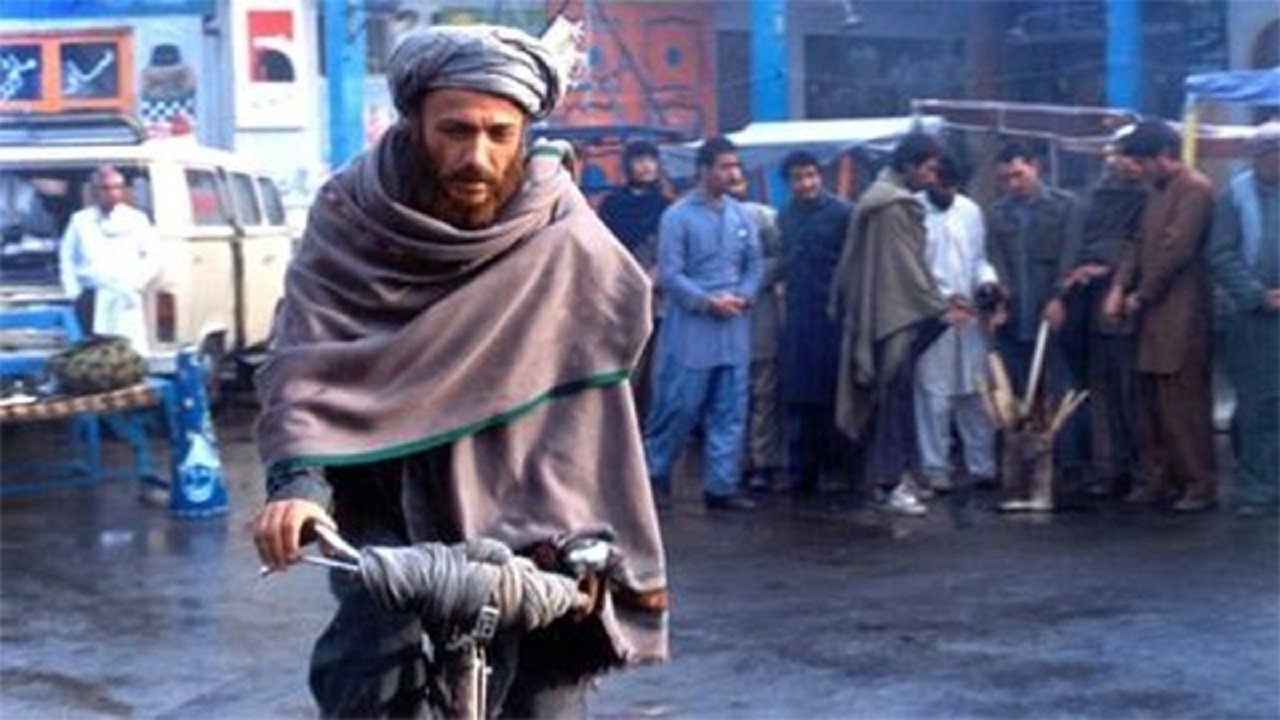
The wife of Nasim, an Afghan immigrant in Iran, is gravely ill. He needs money to pay for her care, but his day labor digging wells does not pay enough. A friend connects Nasim to a two-bit promoter who sells tickets to watch Nasim ride a bicycle continuously for a week. The promoter brings in sick and aged spectators, haranguing them to find hope in Nasim's strength. Aided by his son, who feeds him as he rides, Nasim grinds out the days and shivering nights. Local officials believe this may be a plot and Nasim may be a spy; they try to sabotage him as do those who bet he won't finish the week. Will desperation alone get Nasim the money? Is any triumph an illusion?
Top Cast



Frequently Asked Questions
Is The Cyclist worth watching?
The Cyclist has received mixed reviews with a 6.7/10 rating. It might be worth watching if you're a fan of Drama movies.
Is The Cyclist hit or flop?
The Cyclist has received average ratings (6.7/10), performing moderately with audiences.
What genre is The Cyclist?
The Cyclist is a Drama movie that The wife of Nasim, an Afghan immigrant in Iran, is gravely ill. He needs money to pay for her care, but his day labor digging wells does not pay enoug...
You Might Also Like






Explore More
Critic Reviews
In the aftermath of the Soviet invasion and civil war, hundreds of thousands of Afghans fled across the border with Iran. There they struggled to survive, offering themselves as day labourers at exploitative wages, harassed by officials and just ignored by the bulk of Iranian society. Mohsen Makhmalbaf's 1987 film The Cyclist is an allegory for the Afghan refugee experience, Nasim (Moharram Zaynalzadeh) must pay the hospital stay of his ailing wife and bring up his son Jomeh (Mohammad Reza Maleki), but even backbreaking labour as a well-digger doesn't pay the bills. When a local business learns that Nasim once rode a bicycle for three nonstop, he offers the desperate man the chance to save his family: ride a bicycle for a week in a makeshift circus ring. Makhmalbaf communicates Nasim's lack of humanity by giving him very few lines. Most of the film consists of arguments among the gamblers and local politicians who stand to profit or lose from Nasim's act, as in the background he circles around and around and around. This film would already be heartrending if it were a straight-up tale, but Makhmalbaf makes it even more poignant with a light dusting of magic realism. Though less elegant than some of his later films like Nun va guldoon (released internationally as A Moment of Innocence), this is a memorable film and it's easy to see how it established Makhmalbaf's reputation internationally. Iranian cinema holds many delights, and this is one of its triumphs.